




Lofted Barn vs Side Gable vs Utility Shed: Which to Pick
Walk our Lake City lot on any given Saturday and you'll see the same scene play out. Someone points at a lofted barn, then at a side gable, then at a plain utility shed, and asks the obvious question: "Which one do I actually need?"
The short answer: it depends on what you're storing, how much overhead space you want, and how the shed is going to sit on your property. Each of these three styles solves a different storage problem. We're going to break each one down so you can pick with confidence before you ever set foot on the lot.
If you'd rather skip the reading and see what's currently parked on our lots, browse our live portable building inventory. Every shed on the page is in stock right now at one of our three locations.
Quick Comparison: Lofted Barn vs Side Gable vs Utility Shed
| Style | Roof | Best For | Headroom & Loft | Footprint Efficiency | Typical Price Tier |
|---|---|---|---|---|---|
| Lofted Barn | Gambrel (barn-style) | Vertical storage, workshop with mezzanine, weekend cabins | High peak, loft platforms on each end | Maximizes cubic feet, not floor space | Mid to premium |
| Side Gable | Gable, doors on the long side | Wide drive-in access, riding mowers, side-yard fitment | Standard ceiling, no loft | Long, low profile | Entry to mid |
| Utility Shed (End Gable) | Gable, doors on the short end | Tools, lawn equipment, basic storage | Standard ceiling | Maximum usable floor area | Entry-level |
That's the cheat sheet. Now the details.
Lofted Barn: The Vertical Storage Workhorse
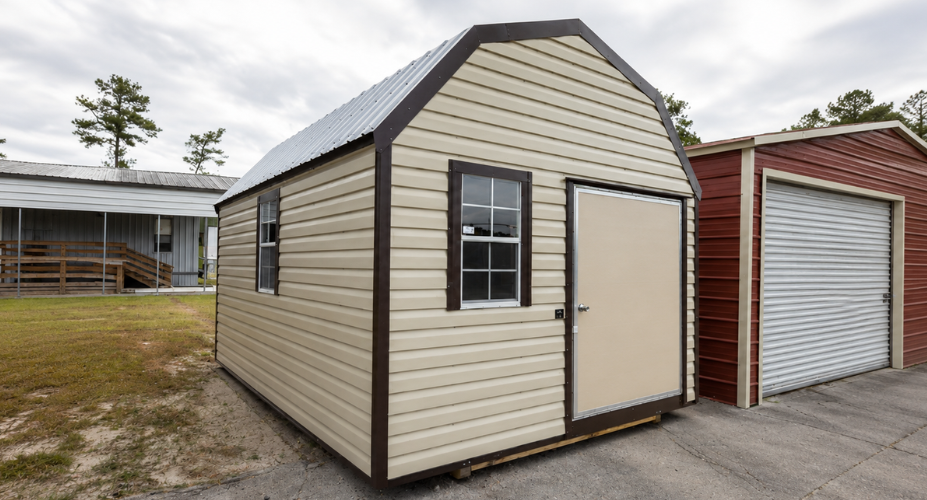
A lofted barn is a portable building with a gambrel (two-slope) barn-style roof and one or two built-in loft platforms tucked under the peak. The loft is essentially a shelf that sits above the main floor and gives you somewhere to stash anything you don't need to grab every day.
This is our most popular shed style at all three locations, and it's not close.
Best uses for a lofted barn:
- Seasonal storage (Christmas decorations, beach gear, hurricane supplies) up top, daily-use tools below.
- Backyard workshop with a mezzanine for parts and lumber.
- Hobby studio, she-shed, or office with overhead storage.
- Weekend cabin shell once you upgrade to a porch or cabin model.
- Any property where the footprint is tight but you have vertical room to work with.
Who it's for: Homeowners who want the most cubic feet of storage per square foot of yard. If you're standing in the shed thinking "I wish I could go up," buy the lofted barn.
The catch: Lofted barns are taller than the other two styles. Before you order, check your county's height restrictions and any HOA covenants. We help with this for every Columbia County, Baker County, and Clay County build.
See lofted barns currently in stock at all three locations.
Side Gable Shed: The Drive-in Specialist
A side gable shed has a standard gable roof, but the entry doors are placed on the long wall instead of the gable end. That one design choice changes what the building can do.
Because the doors sit on the long side, you get a wider, lower opening that's easier to drive a riding mower, an ATV, or a wheelbarrow straight into. There's no loft, but the trade-off is unobstructed floor access along the entire length of the shed.
Best uses for a side gable shed:
- Riding mower or zero-turn parking with room to walk around it.
- Long, narrow side yards where you need the building to sit parallel to a fence line.
- Garden tool storage with a workbench along one of the gable ends.
- Pool equipment and chemical storage.
- Anyone who wants barn-shed looks without the gambrel roof.
Who it's for: Homeowners who care about easy in-and-out access more than vertical loft space. If you load and unload the shed daily, the side gable wins.
We stock side gables at every store. Take a look at our side gable inventory and check the floor plans.
Utility Shed (End Gable): The Simple, SOLID Pick
A utility shed (often called an end gable) is the most straightforward portable building we sell. Standard gable roof, doors on the short end, and a clean rectangular floor plan with no loft and no surprises.
This is the shed that fits the most usable floor area into the lowest price tier.
Best uses for a utility shed:
- Hand tools, hoses, and basic lawn equipment.
- Push mowers and trimmers.
- Bicycle and kid-gear storage.
- Generator or hurricane-prep supply room.
- A starter shed for renters who plan to move it later (rent-to-own works well here).
Who it's for: Buyers who want to maximize floor space and minimize spend, or anyone who simply doesn't need a loft. If you're not stacking storage vertically, you're paying for headroom you won't use.
Browse end gable utility sheds across our Lake City, Macclenny, and Orange Park lots.
Bonus: Porch and Cabin Models
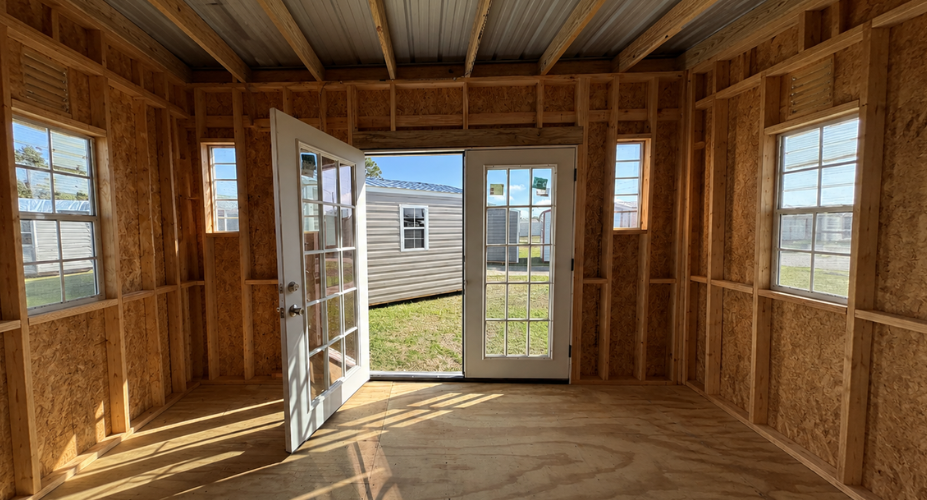
Worth a quick mention. If you're leaning lofted barn but you want the building to do double duty as a backyard hangout, fishing camp, or guest space, look at our porch models. Same gambrel-style construction, plus a covered front porch, and finished out the way you'd expect a small cabin to be.
Our porch model lineup is here. Popular at the Orange Park lot for Clay County waterfront properties.
How to Choose: A Decision Framework
We've sold a lot of sheds across North Florida, and the same handful of questions sort buyers into the right style every time.
1. What's going inside?
- Mostly small stuff, stacked? → Lofted barn
- Riding mower, ATV, or wheeled equipment? → Side gable
- Hand tools, push mower, basic gear? → Utility shed
2. How's your yard shaped?
- Square footprint with room to go up → Lofted barn
- Long, narrow strip along a fence → Side gable
- Anywhere with a level pad → Utility shed
3. What's your budget?
- Entry-level, get-it-done budget → Utility shed
- Mid-range with some upgrades → Side gable
- Long-term primary storage or workshop → Lofted barn
4. Are you planning to finish it out later?
If you might convert the building into a cabin, office, or guest space down the road, start with a lofted barn or jump straight to a porch model. The headroom and the footprint make conversion easier.
North Florida-Specific Considerations
Florida changes the math on shed buying. Three things to think about before you order any portable building in our service area:
Humidity and ventilation: Closed-up sheds in North Florida summers turn into ovens, and trapped moisture eats stored items. We recommend at least one window or a gable vent on every build, regardless of style. Two windows is better.
Hot summers and roof material: Metal roofing reflects heat better than shingles and holds up well in our climate. Both are options on every shed we sell at the same price point. If your shed is going to sit in full sun in Lake City or Macclenny, metal is usually the right call.
Anchoring: Portable buildings in Florida need to be properly anchored. Auger-style anchors at each corner are the standard for our area, and our delivery crews handle this on every install. We follow the wind-load guidance that applies to your county. Not South Florida HVHZ rules, but North Florida requirements still matter.
Foundation: Most of our portable buildings ship on pressure-treated 4x6 skids and don't need a concrete pad to sit on a level yard. If you want a permanent concrete pad, we can advise on sizing during the quote.
For more detail on Florida-specific shed concerns, check our shed maintenance tips for Florida weather post and our hurricane protection guide.
Rent-to-Own and Financing: Both Apply Here
Every style on this list is available through both of our purchase paths.
Rent-to-own works well for buyers who don't want a credit pull or a long financing application. Pick the shed, sign the agreement, and the building gets delivered. Monthly payments apply toward ownership, and you can pay it off early. Our rent-to-own page covers the terms.
Traditional financing is the route for buyers who want longer terms or larger custom builds. We work with multiple financing partners and the application is straightforward. Apply or learn more on our financing page.
Both paths apply to lofted barns, side gables, end gables, and porch models alike. The style you pick doesn't change which payment route is available.
Where to See Each Style in Person
We keep all three styles in stock at every location. If you want to walk inside before you buy (and you should), here's where to find us:
Lake City: our flagship lot, the deepest inventory of all three styles, primary delivery hub for Columbia, Suwannee, and Baker counties
Macclenny: Baker County buyers and Jacksonville-west pickups
Orange Park: Clay County, Fleming Island, Middleburg, and Jacksonville metro
The full live inventory at all three locations updates as buildings sell, so what you see online is what's actually on the lot.
Pick the Right Shed, Then Park It in Your Yard
Here's our take after years of selling all three styles across North Florida:
- Most homeowners should buy a lofted barn. It does the most jobs and holds its value best.
- Buy a side gable if you're parking equipment that rolls in and out daily.
- Buy a utility shed if your needs are simple and your budget is tight.
Whatever you pick, see it in person before you buy. Photos don't show you the door swing, the floor solidity, or the way the shed actually feels inside.
Check our live inventory across Lake City, Macclenny, and Orange Park, or contact the team and we'll match you to the right style for your property. We deliver across North Florida and the Jacksonville metro, and we handle the anchoring on every install.


Frequently Asked Questions
Both have loft storage. A standard lofted barn has the entry doors on the gable end (short side); a side lofted barn has the entry doors on the long side. Side lofted barns give you wider drive-in access, regular lofted barns give you a more traditional barn footprint.
If you have items to store that you don't access daily, yes. The loft platforms add storage capacity that a utility shed simply doesn't have. If your storage is all ground-level, the utility shed is the better value.
Florida generally doesn't allow full-time living in portable sheds because they're not built to residential code. Cabin and porch models can be used as guest spaces or office space, but they aren't permitted dwellings. If a barndominium-style residence is what you want, that's a different conversation that involves pole barn construction, not a portable shed.
It depends on the size and your county. Columbia, Baker, and Clay counties each have their own thresholds. We walk every customer through their county's requirements during the quote process. Our Florida portable buildings buyer's guide covers the basics.
In-stock buildings usually deliver quickly across Lake City, Macclenny, Orange Park, Jacksonville, Middleburg, and Fleming Island once we have your site address and access details. Custom builds take longer because they're built to order. Ask at the lot or on the phone for a current lead time on the specific building you want.
Yes. Every portable building we sell comes standard with a pressure-treated floor system on 4x6 skids. No separate concrete pad required, though you can add one if you want a permanent foundation.


